Battery Demand Reduction Model
Battery and solar simulation for estimating demand-charge savings in Nova Scotia commercial buildings.
Project Overview
Developed at NSCC Applied Energy Research as part of an energy management research effort, this model simulates battery-based demand reduction for commercial buildings in Nova Scotia.
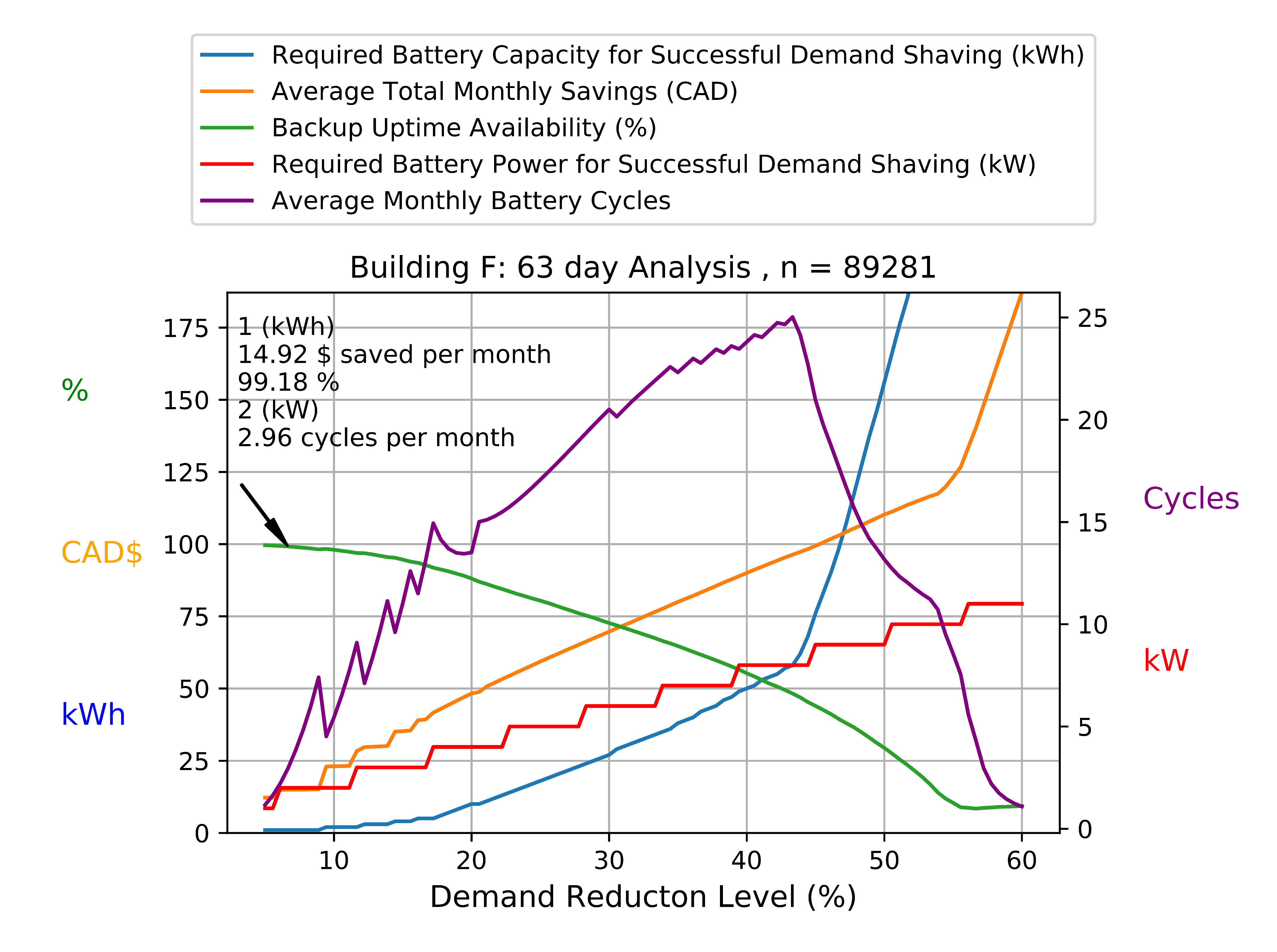
For demand-billed commercial customers (for example, Nova Scotia Power’s General Demand rate class), billing includes an energy charge for total consumption (kWh) plus a demand charge tied to the highest measured demand during the billing period, commonly based on the maximum 15-minute interval. The model takes a building load profile and evaluates different demand-shaving targets, estimating the battery power and energy capacity needed to achieve them.
The model also explores configurations that pair the battery with a solar PV array and evaluates backup-operation scenarios using the same storage system. The work culminated in an NSCC Applied Research publication (title to be confirmed).
Highlights:
- Simulates demand-charge shaving using battery storage against a building load profile.
- Estimates required battery capacity and power across different reduction targets.
- Extends to solar PV and backup scenarios using the same storage system.
Project Details
COMPLETED
2024-05-15
ORGANIZATION